
6 Essential Smartphone Hardware Specifications to Compare Before Buying
Smartphone performance depends on how well several hardware components work together. A fast processor, sufficient memory, efficient battery, and responsive display all influence the user experience. However, choosing a smartphone based on its brand, appearance, or price can overlook important technical differences. Two devices with similar prices may perform differently when running games, recording videos, or handling everyday applications.
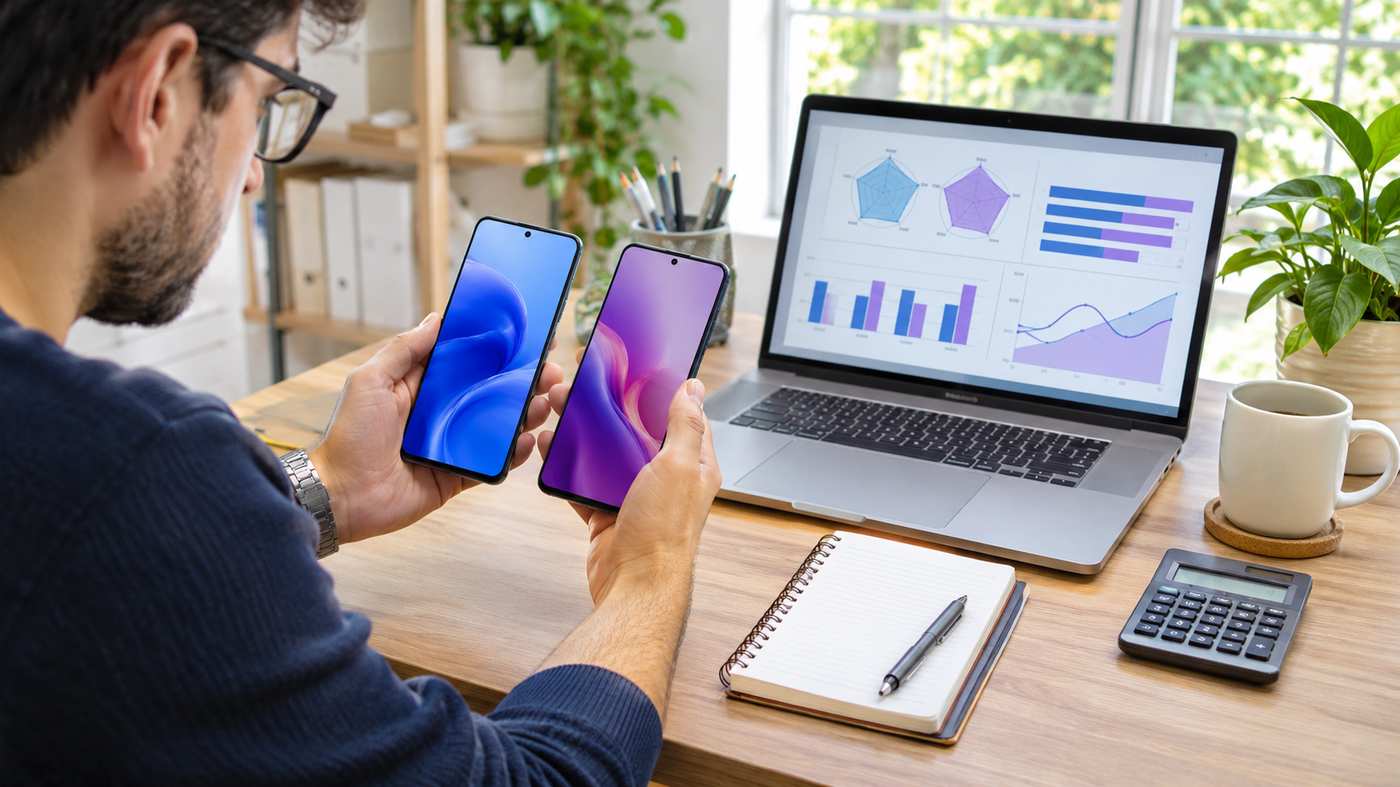
Understanding these differences can be challenging, especially when manufacturers highlight specifications without explaining their practical value. Using a mobile phone comparison guide (comparador de celulares) can help consumers examine hardware features side by side and identify meaningful differences between models. Rather than focusing on individual numbers, buyers can evaluate how each component supports their daily activities and long-term needs.
1. Processor Performance: What Determines Smartphone Speed?
The processor handles instructions that allow smartphones to run applications, process information, and perform calculations. Modern mobile processors usually combine a central processing unit (CPU), graphics processing unit (GPU), and other specialized components.
The Qualcomm Snapdragon platform demonstrates how CPU and GPU capabilities influence application responsiveness, gaming performance, and power efficiency. More powerful processors can improve demanding activities, including video editing, advanced gaming, and multitasking.
However, processor speed should not be judged by clock frequency alone. Core architecture, manufacturing technology, and heat management also affect performance. A processor that generates excessive heat may reduce its operating speed during extended gaming sessions.
For everyday messaging, browsing, and streaming, a capable midrange processor may provide sufficient performance without the additional cost of flagship hardware.
2. RAM Capacity: Why Does Memory Matter for Multitasking?
Random Access Memory (RAM) temporarily stores information used by active applications. It allows smartphones to switch between tasks without repeatedly loading information from internal storage.
Google’s Android Developers documentation explains that Android manages memory by keeping certain background applications cached. When available memory becomes limited, the system may close these processes to free resources.
For consumers, this means RAM capacity can influence how smoothly multiple applications operate. A phone with 4GB of RAM may handle basic communication and browsing, while 8GB or more can provide additional flexibility for demanding applications.
Still, higher RAM figures do not guarantee faster performance. Software optimization and memory management are equally important. Buyers should consider their typical workload before paying for additional capacity.
3. Internal Storage: How Much Space and Speed Do You Need?
Internal storage holds applications, photographs, videos, downloaded files, and operating system data. Storage capacity determines how much information a smartphone can retain without relying on external services.
For lighter users, 128GB may provide adequate space. People who frequently record high-resolution videos, download large games, or store offline media may find 256GB or 512GB more practical.
Storage technology also matters. Samsung Semiconductor explains that Universal Flash Storage (UFS) supports faster data transfers and more efficient operations than older embedded multimedia card technologies.
Understanding how storage hardware works can also help consumers recognize why different storage technologies affect device performance. Although smartphones and computers use different storage configurations, both depend on efficient data access to support everyday tasks.
Faster storage can reduce application loading times and improve file transfers. However, usable capacity is lower than the advertised total because the operating system and preinstalled software occupy space.
Before purchasing, consumers should check whether expandable storage is available and estimate their future storage requirements.
4. Display Technology: What Makes a Screen Comfortable to Use?
A smartphone display affects nearly every interaction, from reading documents to watching videos. Important specifications include screen size, resolution, brightness, refresh rate, and panel technology.
Two common display types are LCD and OLED. Samsung Display describes OLED technology as offering strong contrast and responsive image reproduction. Unlike conventional LCD panels, OLED displays produce light through individual pixels.
Refresh rate is another consideration. A 120Hz display can show more screen updates each second than a 60Hz panel, making scrolling and supported animations appear smoother.
However, higher refresh rates may increase power consumption depending on display technology and software settings. Brightness, color accuracy, and outdoor visibility may matter more to users who frequently work or read outside.
A balanced display should remain comfortable during extended reading, streaming, and productivity sessions.
5. Battery Capacity: Does a Bigger Battery Last Longer?
Battery capacity is commonly measured in milliampere-hours (mAh). A larger capacity generally indicates more stored electrical charge, but actual battery life depends on several interacting factors.
Apple Support explains that battery performance changes with usage patterns, temperature, charging habits, and chemical aging. Processor efficiency, display brightness, and network activity also influence daily power consumption.
For example, a smartphone with a 5,000mAh battery may not necessarily last longer than a smaller-capacity device with more efficient components.
Consumers should compare independent battery tests alongside manufacturer specifications. Charging speed, battery health features, and replacement options also deserve attention, particularly when planning to keep a device for several years.
6. Camera Sensors: Why Megapixels Are Only Part of the Picture
Smartphone cameras rely on sensors to capture light and convert it into digital images. Manufacturers often advertise megapixel counts, but image quality depends on more than resolution.
Sensor size, lens aperture, optical stabilization, autofocus, and image processing all influence photographic results.
Google’s Pixel Phone Help specifications illustrate these differences by listing sensor dimensions, apertures, stabilization features, and camera resolutions separately.
Larger sensors can generally capture more light under comparable conditions, supporting better performance in dim environments. Optical image stabilization can also reduce blur caused by camera movement.
Photography enthusiasts should examine sample images taken under different lighting conditions. Video creators should consider recording resolution, frame rates, stabilization, and microphone performance.
A high megapixel count may be useful, but it should never be the only measure of camera quality.
Why Hardware Specifications Must Work Together
Individual specifications rarely tell the complete story. A powerful processor paired with limited RAM may struggle when switching between demanding applications. Likewise, an advanced display and graphics processor can increase energy requirements.
Thermal management introduces another consideration. During prolonged workloads, smartphones may reduce processor performance to control heat. This can influence gaming stability and sustained productivity.
Buyers should therefore compare complete hardware configurations and independent performance reviews rather than relying on marketing figures.
Choosing Hardware That Fits Your Needs
The most suitable smartphone is not necessarily the model with the highest specifications. Someone who mainly communicates, browses websites, and streams videos may prioritize battery endurance and display comfort. Gamers may place greater importance on processing power, RAM, and cooling.
Meanwhile, photography enthusiasts may value sensor quality, while professionals could benefit from generous storage and reliable multitasking.
Side-by-side specification tools, independent testing, and realistic budget planning can help buyers make informed decisions. As smartphone technology continues to develop, balancing performance, usability, longevity, and affordability remains more valuable than chasing the highest advertised numbers.